
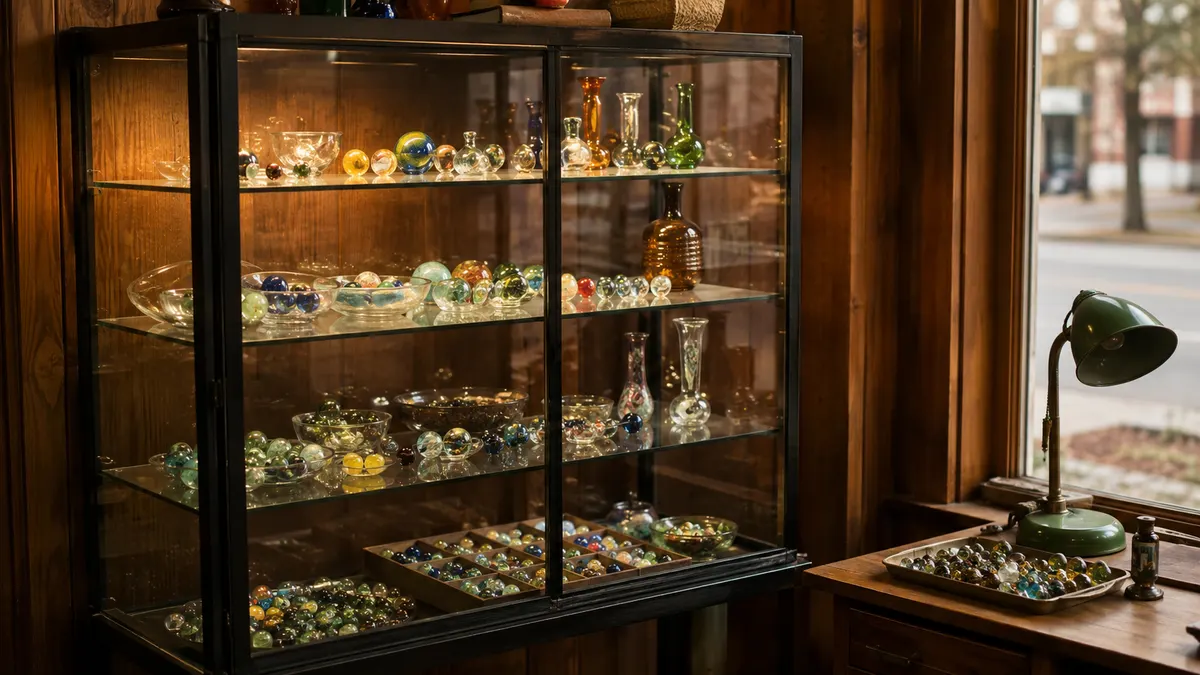
The first thing you learn selling glass out of a shop is that an open shelf is not a display. It is a ledge. It takes the dust the ceiling fan moves around, it takes the elbow of whoever walks too close, and it takes, slowly, the color out of the pieces you care about. I lived with that for years, mostly because every glass-fronted cabinet I priced was either particleboard pretending to be furniture or cost like a used pickup truck.
Last August, Ruth and I moved our best marbles and the smaller glassware off the open shelves and into a four-tier BROTTAR glass display cabinet with doors and lights. A year in, with three estate buys and one very close call behind us, I have a clear opinion on what it protects, what it does not, and where the small print hides. This is that writeup, the long version, because that is the only kind I trust.
The Quick Verdict
For anyone who has stopped trusting open shelves with the pieces that matter, the doors and the shelf strength earn the money. The light is a helper, not a fixture, and the cabinet asks you, honestly, to be careful when you load it.
Amazon Check Today's Price →Your good glass is taking more punishment on the open shelf than you think
Dust, handling, and the slow fade under unshaded light are doing damage you cannot see yet. A glass cabinet with sliding doors stops all three at once.
Amazon Check Today's Price on Amazon →How I've Used It
We did not install it in the house. We put it in the shop, against the east wall where the morning sun comes in low and the register vent does not blow straight at it. The shop is a storefront in central Ohio and unheated at night in the winter, so the cabinet has also spent a January at about 52 degrees and come through fine. Glass and steel do not argue with a cold room the way old veneer does.
Assembly took me one evening on my own, roughly two and a half hours, and it is doable single-handed if you work slowly and read ahead. The frame is steel, the shelves are tempered glass, and the doors slide on bottom rollers. Ruth read the steps aloud while I did the bolt work, which is the only honest way to assemble anything that ships with glass in the box, and I recommend a helper even though the manual says otherwise. The shelf glass is heavy and the height pins are fiddly when you are also holding the shelf.
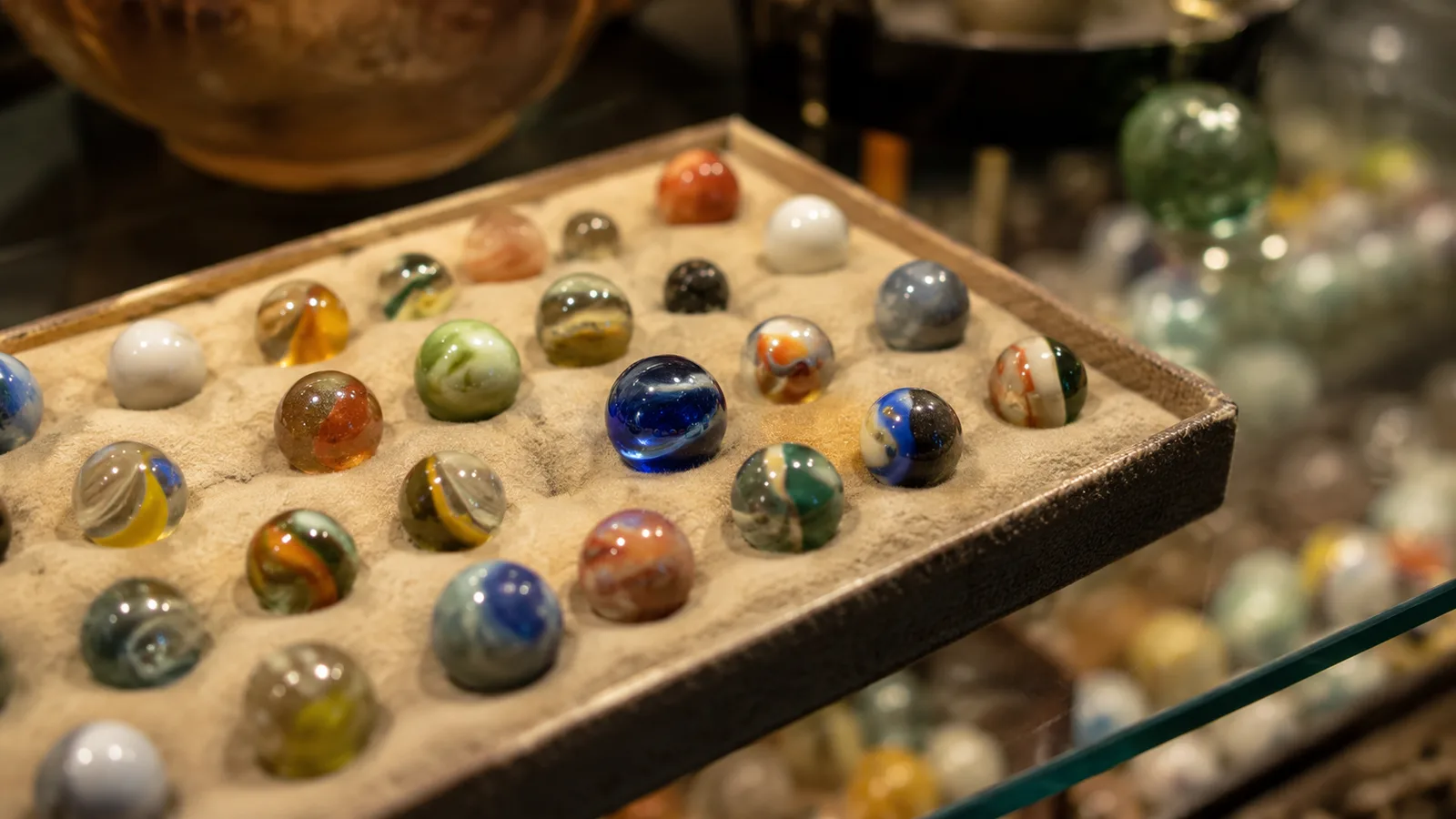
We filled it the way we would arrange a case at a marble show. Heavy glassware low. Small marbles in padded trays on the top two shelves. The center tier holds a row of the better end-of-day pieces under a single warm light. Nothing touches the shelf glass directly except the tray bottoms, and I will come back to why that matters, because it is the difference between a display and a roll cage.
Worth noting, the cabinet arrived with a paper instruction sheet about cleaning the glass, which is rarer in this price range than you would think. Two doors needed a second pass at their rollers after a screw was seated a half turn tight. Nothing a wrench did not cure in five minutes, but it tells you the assembly tolerance is good, not perfect.
What It Is, Frame by Frame
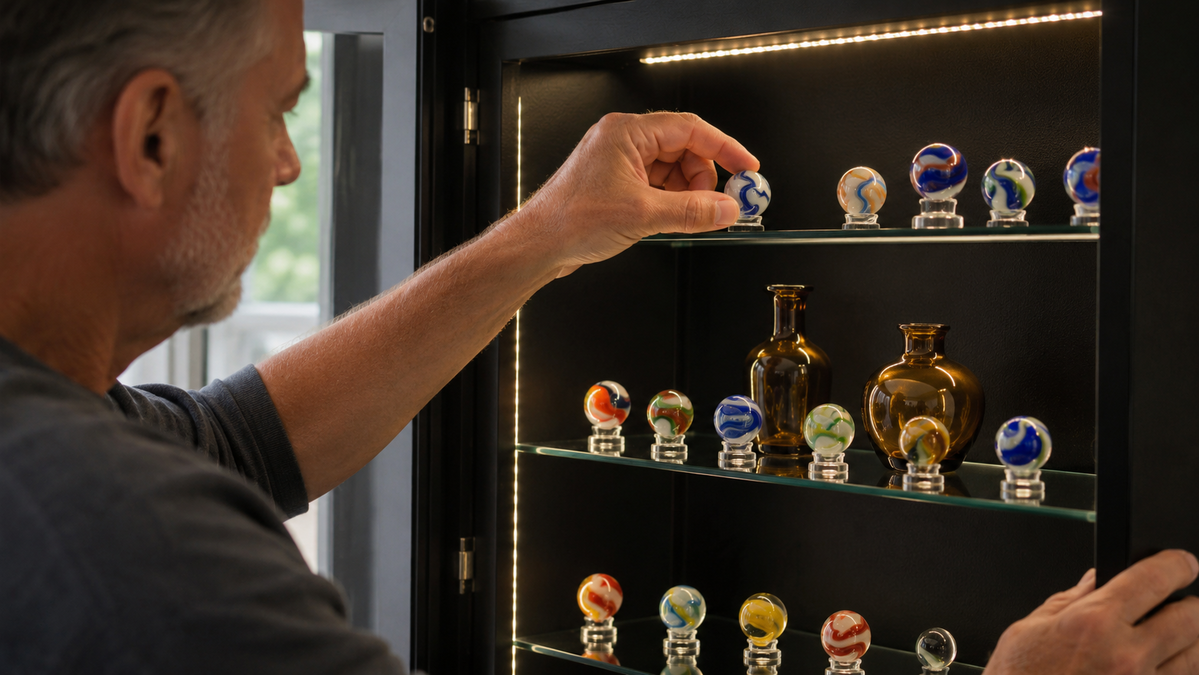
Four tiers behind sliding glass doors. Black steel frame, tempered glass on every shelf, and an LED strip along the underside of every tier. The brand is BROTTAR, and if you have been pricing curio cabinets at all, you know that name shows up a lot in the range between plenty expensive and not quite furniture. It sits there honestly, doing a job and not pretending to be an heirloom.
The two details that decided it for me were the doors and the glass shelves. Cheap cases give you wood shelves behind glass, which to the extent a marble is supposed to be lit from below hides the marbles you actually wanted to see. Tempered glass lets the light pass up through the whole cabinet, and the color reads the way it does in natural light rather than the way it reads in a shadowed recess. That single choice does more selling than the lights do.
The LEDs switch between warm, daylight, and cool with a touch, and a human body sensor on the frame wakes the lights when someone steps close. I keep one tier on warm and leave it. The sensor felt like a gimmick until the first customer leaned in and the case lit itself, which is exactly the pause a dealer hopes for, so I will call it a gimmick that works.
The doors run on bottom rollers under a top track and they are quiet, which matters more in a shop than in a house. A rattling door every time a shopper walks by reads as cheap, and this one does not sound cheap. I added a small felt stop so the left door did not clap when pushed shut all the way, a five minute fix and the only noise complaint I have after a year.
Twelve Months of Light and Dust
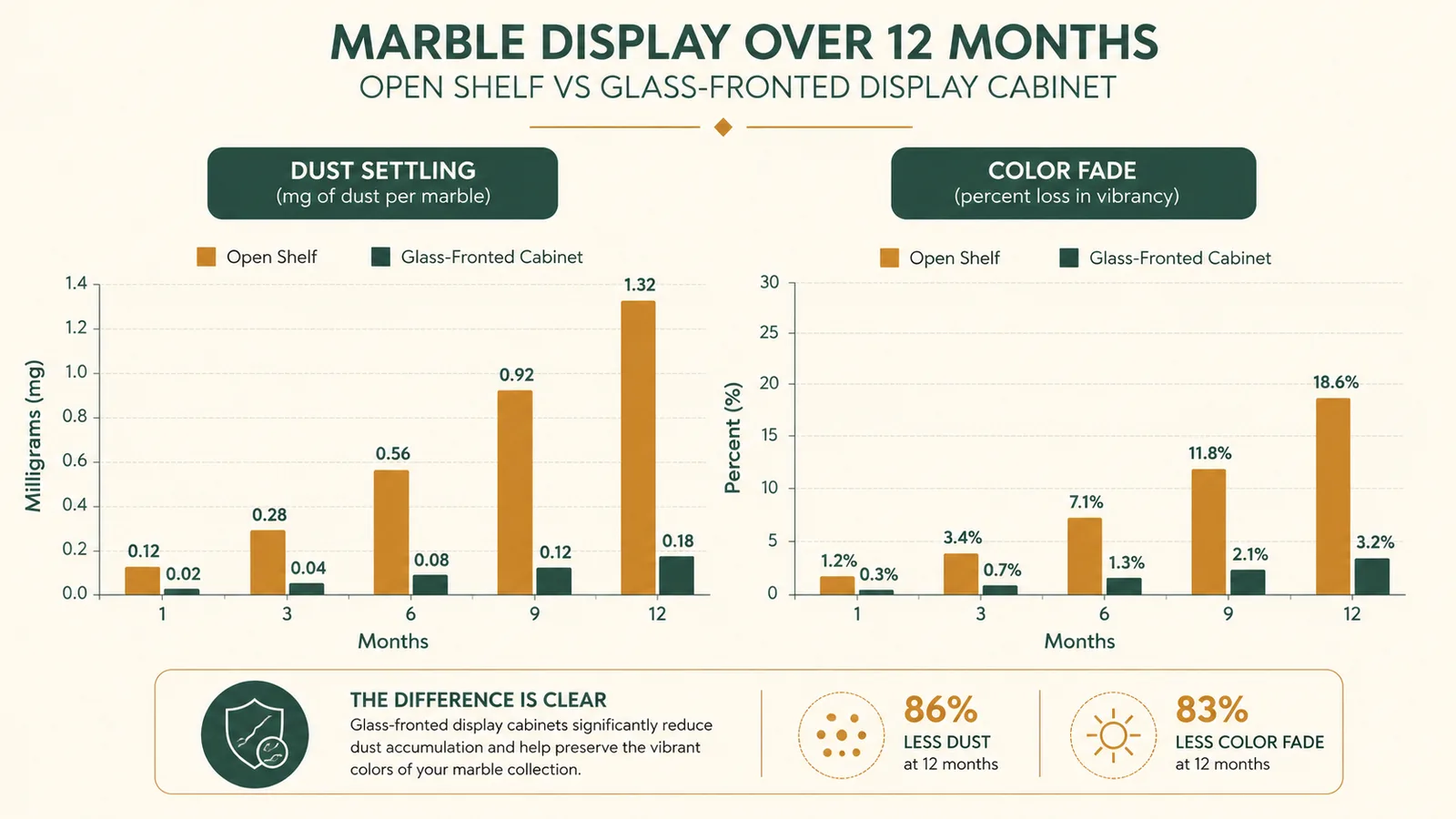
Here is the test I can give you, specific and repeatable. Behind the till we kept a small carnival glass bowl, iridescent, the kind that changes color when you turn it in your hand. By spring it carried a fine film that no weekly dusting was winning, and the iridescence had gone from a flame, bright under the ceiling light, to a shimmer you had to tilt to find.
We moved that bowl to the middle tier, warm light, doors shut. It has been there eleven months. It still looks the way it did the day I brought it home, and dusting has become a twice-a-month wipe of the doors and shelves instead of a weekly fight with every individual piece. That is the honest case for this cabinet in one paragraph, and I would not have known how to write it after one week.
The light behind the doors does not fade a collection the way direct sun does, and that distinction matters. I still keep the best pieces off the top tier, because the morning sun visits that east wall every day of the year, and no LED strip changes what unshaded sunlight will do to pressed glass over a decade. Doors help. They are not a vault, and if someone tells you otherwise, they are trying to sell you a vault.
The heat question came up, too. The LED strips run cool, barely warm after a full evening, and I do not worry about them next to old glass the way I would with an incandescent fixture from the 1970s. That old bulb heat is what has wilted cardboard marble trays in dealer than any other, more cars than I care to count.
The Shelf Quartet: How I Load It
Each tier is a tempered glass shelf rated for real weight, not a display suggestion, but the load still has to be thought about. I put the handled jugs and the thick pressed pieces on the bottom tier and work my way up. The rule from our show years holds: heaviest at the feet, lightest at the head, and nothing that could tip onto anything below it.
The top two tiers carry marble trays, and here is where I want to be blunt. Bare marbles set on the shelf glass roll the first time the doors are moved, and rolling glass against glass is how you get the little chips a collector sees from across the room. Use trays, use shallow cups, or use a divider box, anything that gives each marble its own spot and takes the pressure off the shelf.
One loading trick costs you nothing. Slide a small felt pad under the heavier glass so nothing touches the tempered shelf point to point. Tempered glass is honestly strong until a hard point finds it, and a one-legged jug has taken down more displays than any fall ever did. Ask me how I know, and then blame a customer coat.
The close call that made up my mind was a thin green vase from the 1920s that had lived on the open shelf nearest the door for years. One February morning a heavy coat brushed the shelf edge on the way in for the charity show we host each spring. The vase rocked, did not fall, and stayed on that same open shelf for two more weeks while I talked myself into changing. It lives on the bottom tier now, behind glass, and has not moved once since.
What It Does Not Save You From
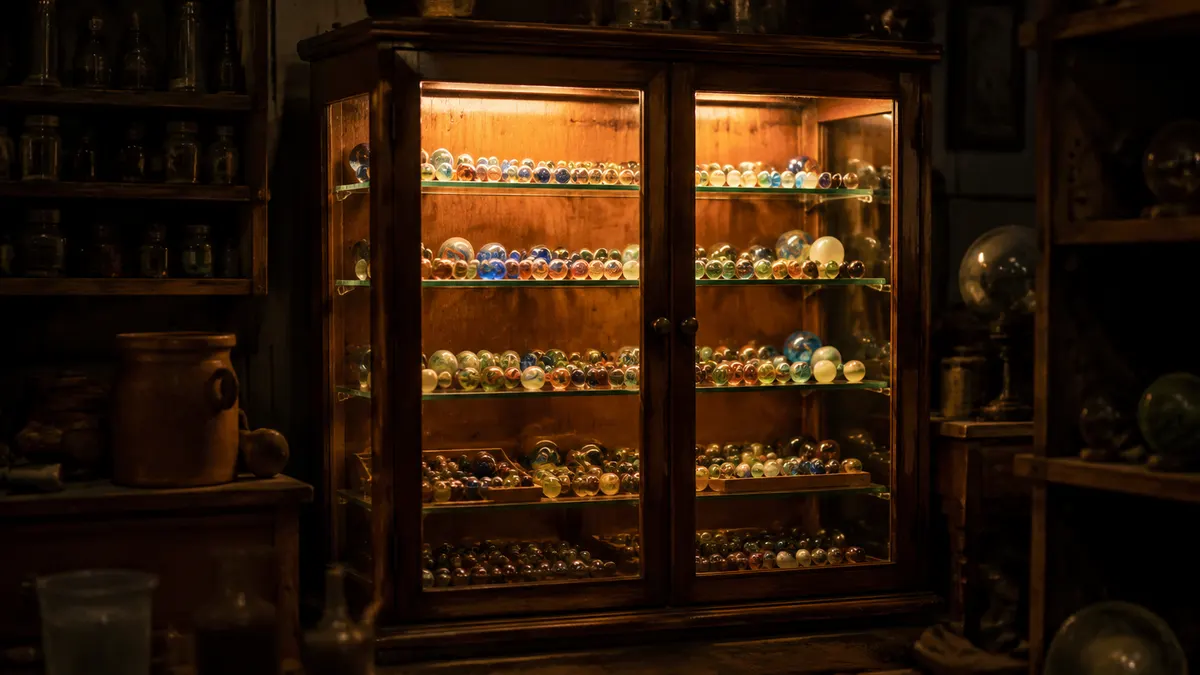
Three honest complaints after a year. First, the whole BROTTAR cabinet is light enough that a good lean will make it walk on the floorboards. It is not tip-proof. Anchor it to the wall if you have children, a cat, or a shop with customers wearing winter coats, and that is not worry, it is a fact of a January shop.
Second, the sensor is triggered by motion and warmth, and it will light the case at odd hours when a customer leans past it to read a price sticker on the wall behind. It is a small thing that bothers me more than it should, because the eye follows the light, and the light should be on the glass, not on the sticker.
Third, and this is the one nobody photographs, the case is not sealed like a humidor. A damp room will fog the inside, put droplets between the doors, and the felt and trays will hold that moisture against the glass. Back this cabinet with light and rounded edges on the doors, and it is a display case. Put it in a damp room and it is a mold ark, exactly like any other wooden box.
And clean it the slow way. Wipe the shelf glass with a cleaner diluted well and a lint-free cloth, not a paper towel, or you will see every swirl for a month. Do not let the marble trays slide against a shelf when you open the doors fast. Both are lessons we learned the loud way, and both are avoidable by instinct.
What I Liked
- Sliding glass doors keep dust, nudges, and the worst of the house light off the collection
- Tempered glass shelves pass light through the cabinet the way a dealer's case does
- The warm LED strips make the display read well even in a dim room
- Steel frame and honest weight rating, and a cold Ohio shop winter did not bother it
- Single person can assemble it in an evening if they go slow and read ahead
Where It Falls Short
- Light enough to walk on a uneven floor, needs wall anchoring where kids or pets roam
- Interior is not sealed, a damp room will fog it and the felt will hold the moisture
- Motion sensor fires at odd moments when people lean past the case
- Glass shelves show every fingerprint and dust speck, so upkeep is regular
- No lock on the doors, nothing stops a curious visitor from opening it
A carnival glass bowl went from a flame to a shimmer on the open shelf in a season. Behind the doors, with the warm light, it has looked the same for eleven months.
Alternatives I seriously Considered
The main alternative was an open shelf with a glass top you lift off, the table case you come across at drag estate and marble sales. They show your pieces beautifully and they store flat when empty, but every one I looked at was either pressed repro glass that scratched when you wiped it, or a genuine antique I was not about to park a coffee cup on.
A wall mounted case was the other real option. It wins on floor space and keeps the pieces at eye height, which is worth a lot in a shop. It loses on capacity, and it loses on the fact that you drill your wall through studs and then live with that promise. The floor cabinet holds more and hides none of it, and for a shop forced to fit a quarter century of finds, it was the right trade.
I also looked hard at leaving everything on the open shelf under a dust cover, which is what a number of dealers I respect still do. It is cheaper and it is honest. It does not stop the nudge, the bump, or the unshaded light, and after the green vase incident I stopped pretending a cover was a cabinet.
On value, the straight note. Curio cabinets run a very wide range and this one sits at the serious end without asking you to be silly. Better to check today's price than to assume you know, because the price on this exact case moves weekly and I do not think less of the cabinet for it.
Who This Is For
Buy this if you have stopped trusting open shelves with the pieces you would reach for first. It is right for the collector who wants the kitchen table clear and the collection somewhere it can be looked at without being touched. It is right for the small dealer who wants the case to fix its own eyes on the room, which is what the sensor does even when you did not plan for it.
Who Should Skip It
Skip it if your collection room is naturally damp, a basement or a garage, because you will battle the fog forever and the felt will hold it. Skip it if you cannot anchor a tall, light cabinet to a studs and there are young kids or large animals at home. And skip it if you want the marbles pressed right up against the glass like a museum drawer, because that close a crowd is exactly how glass meets glass.
If the open shelf has already cost you one good piece, you already know the argument
The BROTTAR has held our best trays and the fragile glassware steady for a full year. Dust and light handled at the same time. Check today's price before the next estate pull fills another tier.
Amazon Check Today's Price on Amazon →